
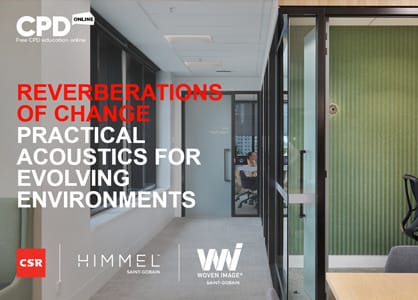
With changing work and learning patterns, less tolerance for background noise and growing awareness of wellbeing, acoustics are now front and centre in architecture.
Using clear explanations of acoustic design concepts, real-life case studies and sound demonstrations, we’ll simplify acoustic principles and help architects and designers specify better solutions.
Learning outcomes
By the end of this session, you should be able to:
- Describe how post-COVID shifts have impacted the way we experience and design for sound in interior spaces.
- Understand and apply basic acoustic principles, including NRC, CAC and RT.
- Understand relevant Australian code requirements and design recommendations for different space types.
- Evaluate materials (such as glass wool, mineral fibre and polyester fibre) for acoustic performance, environmental certifications and fire compliance.
- Identify design strategies for different types of spaces (quiet vs active) using wall panels, ceiling solutions and layout considerations.
This presentation will deliver outcomes related to the following Competency/s from the National Standard of Competency for Architects 2021:
PC24 PROJECT INITIATION AND CONCEPTUAL DESIGN
Be able to prepare and analyse project development options in response to a project brief – its objectives, budget, user intent and built purpose, risk and timeframes, including environmental sustainability considerations
PC28 PROJECT INITIATION AND CONCEPTUAL DESIGN
Be able to draw on knowledge from building sciences and technology, environmental sciences and behavioural and social sciences as part of preliminary design research and when developing the conceptual design to optimise the performance of the project
PC33 PROJECT INITIATION AND CONCEPTUAL DESIGN
Be able to investigate, coordinate and integrate sustainable environmental systems – including water, thermal, lighting and acoustics – in response to consultants’ advice
PC 39 DETAILED DESIGN AND CONSTRUCTION DOCUMENTATION
Understand how the integration of material selection, structural and construction systems impacts on design outcomes
REQUESTING CPD TRAINING IS SIMPLE
To request this CPD training for yourself of your team, simply fill in the form below and our Customer Service team will be in touch.